Sabtu, 08 Januari 2011

Sony Ericsson XPERIA Arc hands-on pictures and video

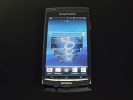
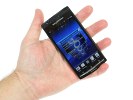
We got our hands on the Sony Ericsson XPERIA Arc and we hurry to give you some live shots, video demos and quick screen comparison with two of the most popular mobile screens out there. The Arc is full of surprises, so let's not waste any more time and see some action.

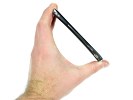
We expected quite a big gadget, but in the end we found the Arc is ok to handle as there's hardly any unused space around the 4.2" screen. The extraordinary 8.7mm thickness (in the center at least) and the arc-like design add for the impression of a smartphone that's quite smaller than what the screen size might suggest.
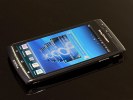
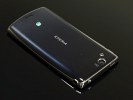
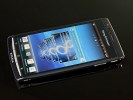
Sony Ericsson XPERIA Arc live shots

The battery cover reminds us of XPERIA X8 with the dark blue splash at the bottom. Unfortunately Sony Ericsson has decided to use glossy plastic, which turns the rear panel into a smudge magnet. The smudge problem also applies for the mineral glass-covered display, but similar to iPhone 4 you can easily clean it.
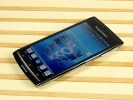
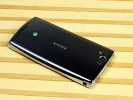
Sony Ericsson XPERIA Arc Sony Ericsson XPERIA Arc
More live shots of XPERIA Arc

Proceeding to the software side of things we meet something familiar. The XPERIA Arc has the typical Sony Ericsson theme and TimeScape UI but beneath that there's the latest Android Gingerbread. Here is a demo video:

http://www.youtube.com/watch?v=Bocxu3WITpI&feature=player_embedded

We were surprised by the lack of the Mediascape UI, but this just might be due to the pre-release status of our unit.

Unlike its X10 predecessor, the Arc is fast and responsive all the time, without any interface glitches, loadings or noticeable lag whatsoever. And this is just a pre-release unit with the software being far from final. We expect the retail Arc to be an excellent performer.

Sony Ericsson XPERIA Arc relies on an LED-backlit LCD screen with the BRAVIA Mobile Engine for picture improvement. Sony Ericsson calls that combo the Reality display. Well, in reality, it's nothing out of this world.

If we have to compare it (and we do, don't we?), it's definitely better than the screen of the Desire HD and that of the previous XPERIA X10. The Samsung's Super AMOLED screens and the Apple iPhone screen are still on top. And so is, the Nokia Clear Black display too. So on it's own, the Arc's Reality display is a really nice achievement but that's about it.
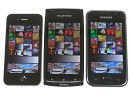
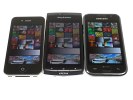
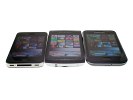
The Arc's Reality display compared to iPhone Retina and Samsung Galaxy S Super AMOLED

Looking head-on at the Arc's display the colors seems natural and the contrast is excellent. When you look from the side, the viewing angles are nice too, but the contrast and the colors can't keep up.
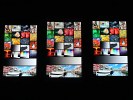
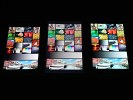
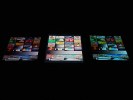
The Arc's Reality display compared to iPhone Retina and Samsung Galaxy S Super AMOLED

Still we give the credit of Sony Ericsson for the improvement over its previous generation displays and hope we'll see some development in this direction.

Well, that's pretty much everything we wanted to share with all of you today. We're working on our XPERIA Arc preview and you should expect it in a few days.

Read more »

Toshiba T215 – 11.6-Inch

Toshiba have just recently announced the Toshiba Satellite T215 for the US market, and its already available to order.

The Toshiba Satellite T215 is a 11.6-inch thin and light notebook powered by AMD hardware. It is basically the AMD version of the Toshiba T210 which was announced very recently in the UK with Intel hardware.

The Toshiba T215 officially goes on sale this Sunday (June 20th), but J&R are already listing two versions of the Toshiba Satellite T215D for $470 and $499 for the single core and dual core version respectively.

Toshiba are saying the T215 takes off where netbooks left off, giving you more power and screen space, but maintaining portability and battery life. Five hours battery life is expected.

Toshiba Satellite T215D

Toshiba Satellite T215D

Design wise it looks like a larger version of their netbook offerings with a metallic interior. It measures 284 x 202.8 x 16.6 – 26.2 mm and weighs just 1.48 kg / 3.3 lbs.

Both models both feature an 11.6-inch LCD with a 1366 x 768 pixel resolution, 2GB of RAM, a 250GB hard drive, 802.11b/g/n WiFi, ATI Radeon HD 4225 graphics, HDMI output, eSATA, and Windows 7 Home Premium.

The highend model (Toshiba T215D-S1150) features the dual core AMD Athlon Neo K325 1.3GHz processor, and is available for $499. The Toshiba T215D-S1140RD is $30 less at $470 and features the single core Athlon Neo K125 1.7GHz processor.

Read more »

Toshiba Updates Satellite Notebooks with Intel Sandy Bridge

We got a chance to take a look at the new line of Toshiba notebooks updated at this year's CES. Most of the Toshiba Satellite lineup will be making use of Intel's new Sandy Bridge chipset. This latest generation of Intel's Core i3, i5, and i7 processors promise to deliver significantly better processor performance and some improvements in the integrated graphics so you won't have to drain your laptop battery with a dedicated graphics card when you're just surfing the web or working in Microsoft Office.

Speaking of dedicated graphics, many of the new Toshiba Satellite notebooks use the latest NVIDIA GeForce graphics with NVIDIA Optimus technology despite Intel's latest integrated graphics solution. Optimus automatically switches between the Intel integrated graphics and the GeForce dedicated graphics to give you video and gaming performance when you want it and as much battery life as possible when you need it.

Satellite A665 3D

  • 15.6" diagonal widescreen HD TruBrite 3D-ready display (120Hz)
  • NVIDIA 3D Vision kit with active shutter 3D glasses and integrated 3D Vision IR emitter
  • Toshiba Video Player with easy 2D-to-3D DVD conversion
  • Intervideo WinDVD BD player with 3D Blu-ray Disc support
  • 2nd Generation Intel Core processors with Intel TurboBoost 2.0 technology
  • Intel Core i7-2630QM or Intel Core i5-2410M
  • NVIDIA GeForce GT 540M GPU with 1 GB of GDDR3 video memory
  • Up to 8 GB DDR3 Memory
  • Hard drive configurations available up to 640 GB
  • 802.11 b/g/n wireless and Bluetooth V2.1 + EDR (on select models)
  • Integrated 4G WiMAX wireless technology (on select models)

Updated Qosmio X505

  • 18.4-inch 1080P HD TruBrite widescreen display
  • 2nd Generation Intel Core processors with Intel TurboBoost 2.0 technology
  • NVIDIA GeForce GTX 460M graphics with 1.5GB of DDR3
  • Up to 8GB DDR3 Memory
  • Starting price of $1,299

Satellite M645

  • Satellite A665: 2nd Generation Intel Core i3-2310M, Core i5-2410M and Core i7-2630QM
  • NVIDIA GeForce 310M, GeForce GT 540M, or GeForce GT 525M graphics processors with NVIDIA Optimus technology
  • Up to 8 GB DDR3 memory
  • Up to 640 GB hard drive configurations
  • harman/kardon stereo speakers with Dolby Advanced Audio technology
  • USB 3.0, Intel Wireless Display 2.0, Gigabit Ethernet, WiMAX, Slot-loading DVD drive and Blu-ray Disc drive

Satellite E305 (Best Buy exclusive)

  • Powered by the 2nd-Generation Intel Core i5-2410M processor with Intel HD graphics and Intel TurboBoost 2.0 technology
  • Exclusive Aluminum Finish in Champagne
  • All-new Touch Pad design with smooth right and left mouse buttons
  • Premium Raised Tile keyboard with LED Backlighting
  • Starting weight of 4.95 lbs. with a slim profile measuring just 1.2 inches thin

Mini NB505 netbook

  • Powered by the Intel Atom N455 dual-core processor
  • Windows 7 Starter OS
  • 250 GB hard drive
  • 1 GB DDR3 RAM
  • Full-size raised-tile keyboard and large multi-touch touch pad
  • 10.1" LED Backlit display

Toshiba also had the child-friendly Satellite Kids PC L635 and the AMD-powered Satellite L675D out on display as well. Overall, a lot of new technology-packed notebooks that we can't wait to get our hands for full reviews. Stay tuned for more information on these upcoming notebooks in the coming weeks and months as Intel Sandy Bridge systems start shipping.

Read more »

Razer Switchblade: The Future of PC Gaming?

Fresh from its debut at CES 2011, the Razer Switchblade is turning heads and making people rethink what "PC gaming" means. This Intel Atom-powered handheld mini notebook promises to deliver PC games running on Windows 7 and still run those games at 30 frames per second or more!

Razer is a company that has long been known to PC gamers as a manufacturer of some of the best PC gaming accessories. However, at this year's Consumer Electronics Show the center of the Razer booth wasn't dedicated to headsets, keyboards, or mice. No, the real attention was focused on the Razer Switchblade prototype.


The Razer Switchblade is essentially a new take on a handheld gaming device: Take a Windows 7 notebook, shrink it as much as possible, give it a cool control interface, and make sure it can play a vast library of existing and future PC games. Although representatives from Razer were quick to point out that the Switchblade is months (or more) away from actual availability, we haven't been this excited about PC gaming on a mobile platform since the Alienware M11x.

Unlike traditional gaming notebooks such as the Alienware M11x, the Razer Switchblade features a much smaller 7-inch capacitative multi-touch screen and a unique keyboard design that is just plain cool. Rather than limiting the tiny handheld PC with a traditional QWERTY keyboard, Razer is using a dynamic, programmable keyboard.

The keyboard itself is actually a second LED-backlit touchscreen display which has been overlaid with transparent tactile keys. This means that each key can be transformed into whatever is needed for Windows 7, a specific application, or a specific game. For example, when you first turn on the Switchblade and look at the keyboard you'll see a traditional QWERTY keyboard. However, as soon as you launch a movie, the text on the keys changes to a media player interface similar to a DVD or Blu-ray player. If you launch Left 4 Dead 2 or World of Warcraft, then the keys change into a custom interface with shortcuts for specific gameplay controls.

This is hands down one of the most innovative ideas we've seen for a keyboard.

After you look past this amazing keyboard, the details about the Razer Switchblade get a little fuzzy. This "concept prototype" is powered by an unreleased and unnamed Intel Atom processor and runs the Windows 7 operating system along with a custom Razer UI to control the keyboard changes and make it easier to use the main 7-inch display. Similarly, there is no word on what Graphics Processing Unit (GPU) is powering the games that run on the Switchblade.


Representatives from Razer kept mentioning the Switchblade would play games and video at "30 frames per second" but wouldn't go into any more details about resolution, in-game detail settings, or even whether the frame rates mentioned were minimum, average, or maximum frame rates. Although Razer hasn't settled on the final technical specs for the Switchblade, it will likely ship with a 128 GB SSD, Wi-Fi, 3G, a USB 3.0 port and a mini-HDMI port for watching video or playing games on a larger screen. Razer also claims the Switchblade will give PC gamers about 4-6 hours of gameplay and "significantly more" battery life if you're just browsing the web or using it as a Windows PC.

The big question here is: Can the Razer Switchblade deliver on the hype? Although we're talking about a future version of the Intel Atom processor and an unknown GPU, we've yet to see an Atom-powered device deliver the level of in-game performance that PC gamers expect accross a wide range of game titles. Razer only had a few in-game screen shots and short demo video clips to showcase the performance of the Switchblade. It isn't clear whether this handheld Windows 7 PC can handle more than a few specific games or even how well it performs with those games. Of course, another major factor that will dictate whether PC gamers embrace the Switchblade is the price. Most Atom-powered netbooks start around $250, but it's doubtful that Razer will deliver a device like this at netbook prices.

Our hopes are high, but we'll have to reserve our judgement until we can get our hands on a production-level review sample of the Razer Switchblade.

Be sure to visit the NotebookReview.com homepage for updates on this innovative product as they become available.

Read more »

Jumat, 07 Januari 2011

Saingi Apple, Amazon Luncurkan Toko Aplikasi


Langkah baru dijejakkan Amazon di awal tahun ini. Amazon mengundang para pembuat aplikasi untuk mendaftarkan hasil karya mereka di toko aplikasi online-nya, Amazon Appstore Developer Portal.

Terjunnya Amazon di pasar aplikasi online memberi sinyal bahwa perusahaan yang berpusat di Seattle, Washington, Amerika Serikat (AS) ini siap menyaingi Apple yang sukses di ranah ini.

Beberapa pengamat ada juga yang menyebutkan, langkah ini merupakan bagian dari persiapan yang dilakukan Amazon untuk meluncurkan Amazon Appstore untuk Android akhir tahun ini. Seperti diketahui, September 2010 Amazon menyatakan rencananya meluncurkan toko aplikasi khusus untuk platform Android.

"Konsumen juga memiliki minat yang kuat di ranah mobile. Dan kami berupaya keras agar layanan dan produk terbaik kami tersedia di perangkat mobile," terang Amazon di blognya, seperti dilansir Wall Street Journal.

Untuk itu, dikatakan Amazon pihaknya terus menginovasi pengalaman berbelanja mobile dengan aplikasi Amazon Shopping, Amazon Price Check dan yang terbaru, Windowshop untuk iPad.

"Sebuah toko aplikasi adalah langkah logis kami berikutnya untuk Amazon di bidang mobile," ujar Amazon.
Read more »

 
Cheap Web Hosting | Top Web Hosts | Great HTML Templates from easytemplates.com.